In-house vs 3PL fulfilment: What's better for my brand?

Table of contents
Share
With global ecommerce sales growing dramatically year-on-year, more and more brands are being forced into a serious fulfilment decision earlier than they planned. The problem is that most teams don't choose between in-house fulfilment and a Third-Party Logistics (3PL) provider during a calm planning cycle. They choose after space runs out, error rates climb, or peak season pulls the whole operation apart. By that point, the evaluation is rushed and the outcome is often regretted.
TL;DR: According to a 2025 Radial/Dynata survey of 200 retail decision-makers, 70% of brands still rely on in-house fulfilment, but outsourcing rises to 57% at $50M–$100M revenue and 76% at $150M–$200M. 3PL providers typically represent a break-even point at 1,000–3,000 orders/month and negotiate carrier rates 10–30% lower than small shippers can achieve independently. This guide compares total cost, setup time, control trade-offs, and the hybrid model then gives you a weighted decision matrix to find your answer.
In-house fulfilment vs 3PL fulfilment: What's the difference?
In-house fulfilment
In-house fulfilment means your business owns or leases the warehouse, hires the staff, deploys the Warehouse Management System (WMS), and manages every shipment. A 3PL takes over all those functions, you send inventory to their facility and they fulfil orders on your behalf. The core trade-off is control and margin retention (in-house) vs. scalability and variable cost structure (3PL).

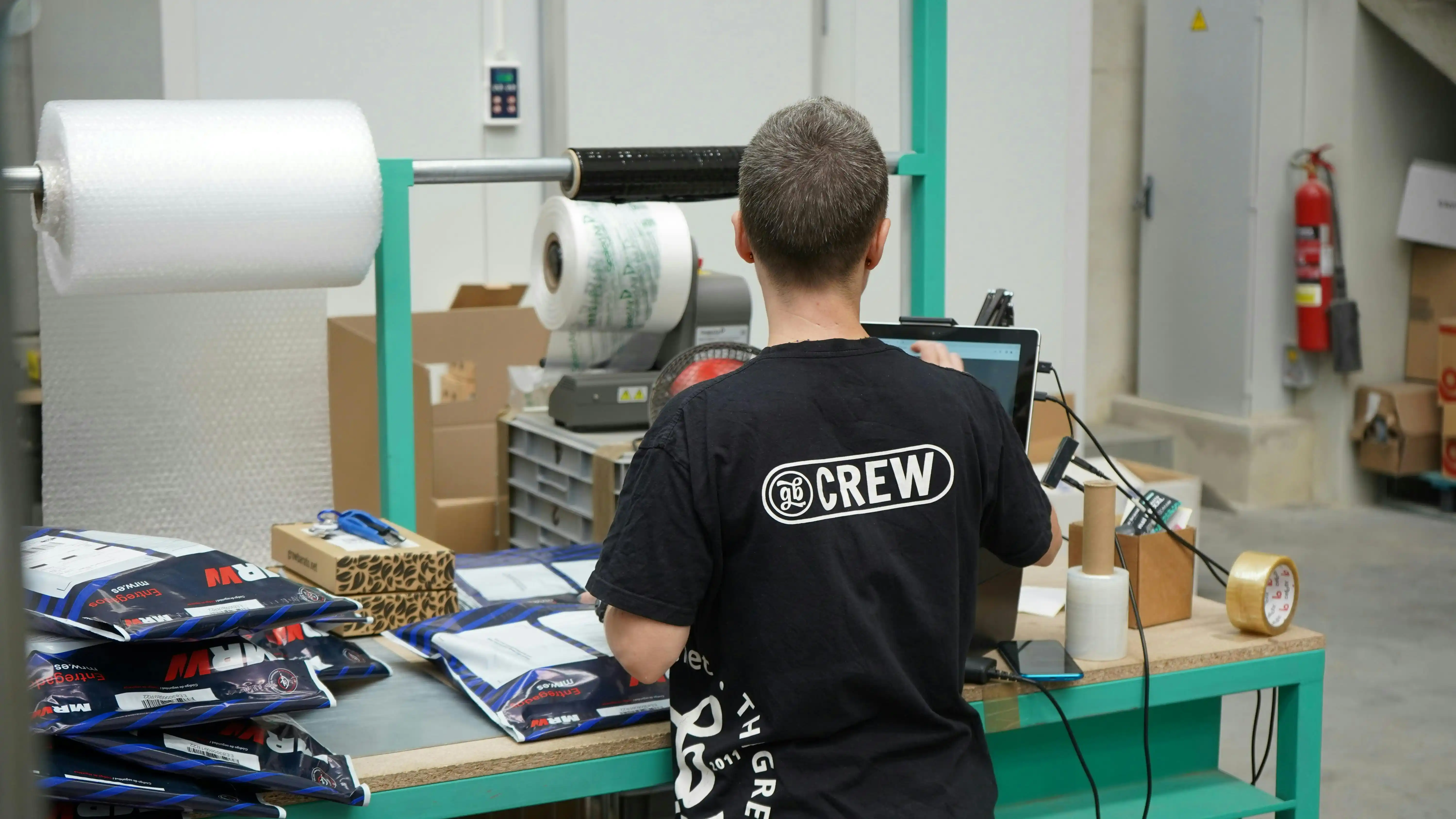
Operationally, in-house fulfilment puts you in charge of every step: receiving stock, storing it, picking individual items per order, packing them, booking carriers, dispatching, and processing returns. That means your team owns every success and every failure. A mislabelled pallet is your problem, a carrier missing cut-off is your problem, and a spike in order volume during Q4 is (yes, you guessed it) your problem to staff for.
3PL fulfilment
A 3PL takes ownership of those same steps. You retain responsibility for product sourcing, marketing, customer service, and brand decisions, but the physical execution of moving goods from their facility to your customer sits with the provider. You also pay variable fees rather than fixed overheads.
One common misconception: 3PLs are only for large businesses. That's not accurate. Many 3PLs actively serve brands at 300–500 orders/month, particularly those with complex SKU profiles or geographic shipping requirements that make in-house unit economics unviable from day one.
According to Radial/Dynata's 2025 survey, 70% of brands still rely on in-house fulfilment and 59% operate from a single facility. That doesn't mean in-house is the right call for most of them; it often reflects inertia rather than deliberate choice.
In-house fulfilment costs
In-house fulfilment costs more than most brands expect. Before you ship a single order, you're looking at three main expense categories:
Space: Warehouse lease rates averaged $10.10/sq ft/year in the US in 2025 (Cushman & Wakefield). In coastal markets, that figure runs closer to $18–22/sq ft.
Technology: A Warehouse Management System (WMS) (the software that tracks your stock and orders) typically costs £1,500–£3,000/month, plus £10,000–£30,000 to set up in year one.
People: The median UK warehouse operative earns £25,500/year (ONS ASHE). Add 20–30% on top for employer National Insurance and pension contributions, and labour ends up accounting for 45–57% of total fulfilment costs.
A small operation at 1,000 orders/month typically spends £75,000–£150,000 in its first year, before carrier costs.
The cost most brands forget: staff turnover
Warehouses have a serious retention problem. Around 40% of warehouse staff leave every year (BLS, 2024). Replacing each person costs £4,000–£7,000 once you account for recruiting, training, and the time it takes a new hire to get up to speed.
Run the numbers: a team of six with 40% annual turnover means replacing two to three people every year. That's £10,000–£21,000 in hidden costs that most brands never put in a spreadsheet.
3PL fulfilment costs
3PL pricing is variable by design. You pay per order processed, per unit stored, and per shipment rather than carrying fixed overhead. At scale, 3PLs typically negotiate carrier rates 10–30% lower than small shippers can achieve independently, and zone-skipping strategies reduce per-package costs by a further 15–40% (Red Stag Fulfillment, 2025). The typical break-even point where 3PL becomes cheaper than in-house fulfilment is 1,000–3,000 orders/month.
A standard 3PL fee structure breaks down as follows:
Receiving fee: Charged per pallet, carton, or unit when inventory arrives at the facility
Storage fee: Charged per pallet, bin, or cubic metre per month
Pick-and-pack fee: Per order, sometimes with a per-item component for multi-SKU orders
Shipping pass-through: Carrier cost (negotiated rate) passed to you, often with a handling margin
Return processing: Per returned unit, sometimes including re-inspection and restock fees
Value-added services: Kitting, custom packaging, inserts, labelling — quoted separately, often on request
What's frequently billed separately but presented as included: custom packaging sourcing, hazardous material handling, returns that require manual quality decisions, and integration support for non-standard platforms. Read all costs involved carefully before signing.
How fast can you start fulfilling orders?
Setting up in-house fulfilment from scratch facility fit-out, racking, WMS deployment, and hiring, typically takes 3–6 months. Onboarding with a 3PL takes 30–60 days for standard integrations; fast-onboarding providers go live in 5–7 days once inventory is in transit. For brands with a growth deadline (a product launch, a retail partnership, or a looming peak season), the 3PL timeline advantage is often the deciding factor.
Time to first shipment (comparative timeline):
Fulfilment Model | Time to First Shipment |
Fast-onboarding 3PL | 5–7 days |
Standard 3PL | 30–60 days |
Enterprise 3PL | 60–90 days |
Complex multi-channel 3PL | 8–12 weeks |
In-house setup (from scratch) | 3–6 months |
(Source: Simpl Fulfillment, 2025/industry consensus)
The in-house timeline breaks down into phases: lease signing and legal (2–4 weeks), facility fit-out and racking installation (4–8 weeks), WMS selection and implementation (6–12 weeks, often the longest phase), hiring and training (4–6 weeks, often running in parallel). Delays in any one phase cascade into the next.
3PL onboarding delays most commonly come from two sources: integration complexity (non-standard platforms or custom OMS builds require more development time) and inventory that arrives unorganised or mislabelled, requiring manual sorting before the provider can go live. Neither is unavoidable and both are worth addressing before you start the clock.
Control, customisation, and when in-house wins
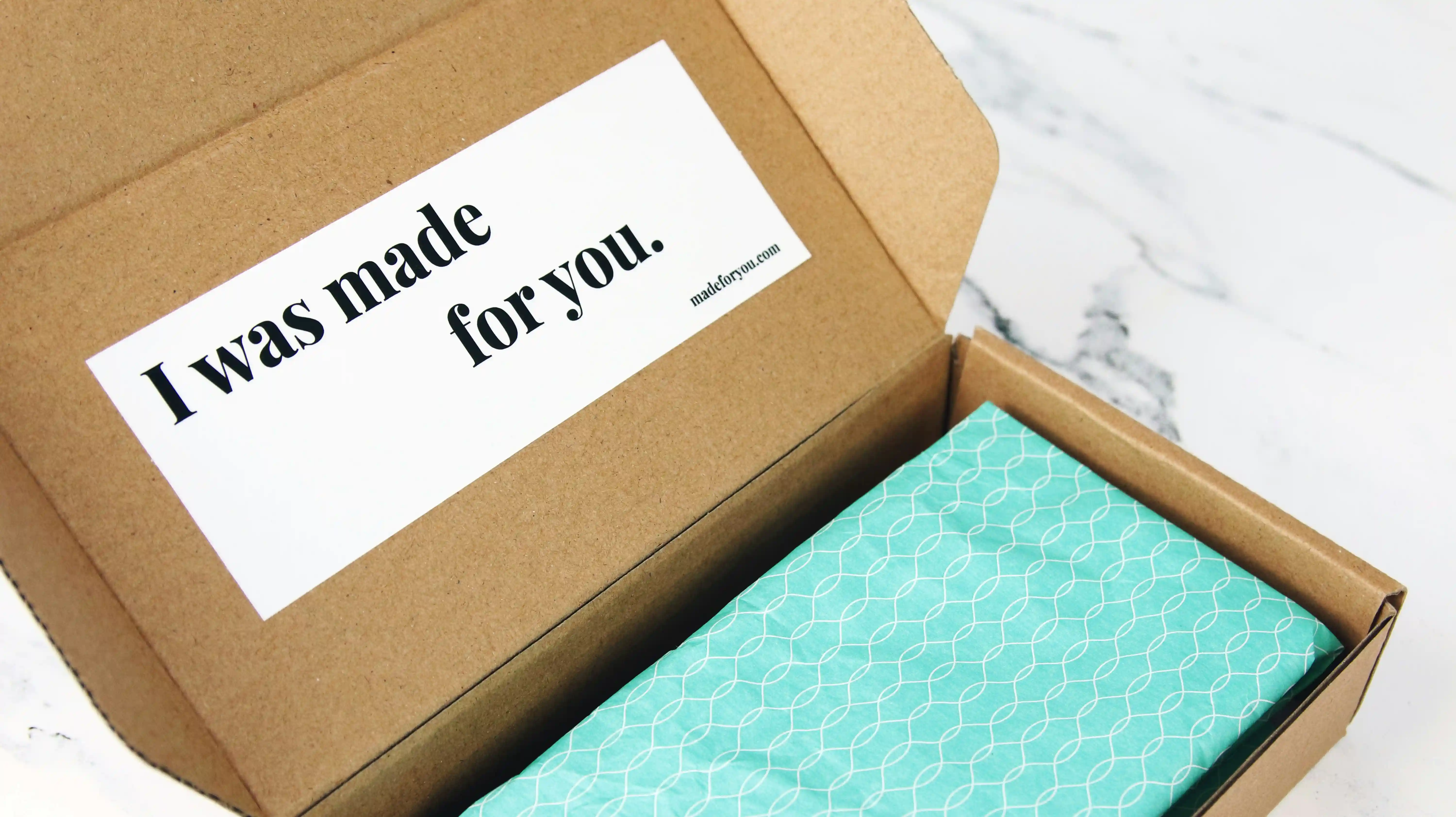
In-house fulfilment wins on control. Brands with highly customised unboxing experiences, proprietary kitting workflows, regulated products (supplements or cosmetics requiring serialisation), or white-glove assembly requirements often find that 3PLs can't execute their brand standards cost-effectively — or at all without prohibitive value-added service fees.
There's also a legitimate margin argument for high-volume, operationally mature brands. Once a business has built a well-staffed, well-systems-ed warehouse operation and optimised its carrier contracts, the per-unit cost of in-house fulfilment can dip below what a 3PL charges.
The reasons brands choose to stay in-house, according to Radial/Dynata (2025): full visibility over operations, IP and product protection, and the ability to run custom packing workflows without additional cost. Those are valid, specific reasons not just inertia.
The challenges in-house operators actually face
The same survey is honest about where in-house fulfilment creates real friction:
47% of in-house operators cite managing growth and scaling as their top challenge
44% struggle to add new sales channels to their fulfilment operation
40% report inflexible technology as a binding constraint
58% of sub-£50M brands cite high base transportation costs — the direct result of having no carrier negotiating leverage
The technology constraint is worth unpacking. Many brands running in-house fulfilment are using WMS software that wasn't built for multichannel retail. Adding a new sales channel (Amazon, a wholesale portal, a B2B account) requires either significant WMS development work or manual workarounds — both of which introduce error risk and slow down the team.
Hybrid fulfilment models
Many mid-market DTC brands don't choose cleanly between in-house and 3PL. They use both. A common hybrid model keeps high-touch, custom-kitted orders or local fulfilment in-house while routing standard orders, oversized SKUs, or geographically distant customers to a 3PL network. This captures the control advantages of in-house without the scalability ceiling.
In practice, hybrid models look like this: a brand retains a small in-house team for same-day local dispatch, bespoke gifting orders, and B2B pallets, while routing all standard DTC orders through a 3PL with better carrier rates and national coverage. The split is driven by order type and destination, not arbitrary division.
Hybrid works best when:
You're growing fast but haven't yet committed to a full 3PL transition
Your SKU range includes a meaningful split between standard and bespoke orders
You're entering new geographic markets and want to test 3PL performance before committing
Questions to ask before adopting a hybrid model
Three operational questions determine whether hybrid is genuinely viable or adds complexity without benefit:
Can your OMS/WMS split order routing by SKU, location, or customer segment? If not, hybrid becomes a manual routing exercise, which reintroduces the error risk you were trying to avoid.
Does your 3PL partner support partial inventory relationships? Some providers require full inventory commitment or won't integrate unless they're the primary node. Confirm this before committing.
What's the minimum volume commitment for the 3PL node? A minimum monthly spend requirement that assumes full-volume routing doesn't work for a partial relationship. Get the hybrid terms in writing.
FAQs
What is the difference between 3PL and in-house fulfilment?
In-house fulfilment means your business stores, picks, packs, and ships orders using your own staff, space, and systems. A 3PL (Third-Party Logistics provider) takes over all those functions — you send inventory to their warehouse and they fulfil orders on your behalf. The core trade-off is control (in-house) vs. scalability and variable cost structure (3PL).
How much does it cost to set up in-house fulfilment?
The cost of setting up an in-house fulfilment operation varies massively, as it involves a warehouse lease, a WMS, racking, equipment, and staffing.
When should a brand switch from in-house to a 3PL?
The clearest triggers: order volume approaching 1,000–3,000/month (the typical break-even threshold); recurring missed SLAs, particularly during peak seasons; logistics tasks consuming more than 20% of the team's working week; storage space consistently maxed out; or sustained high error rates driving return costs.
What are the disadvantages of using a 3PL?
The primary risks are reduced control over brand experience and packing customisation, dependency on a single provider's performance and technology, contract lock-in with minimum volume commitments and termination penalties, and visibility limitations. The NTT DATA Annual 3PL Study found 83% of shipper relationships are successful — meaning 17% experience significant issues, most often traced to poor customer service and unmet expectations. Provider selection and SLA definition are the main levers.
How long does it take to onboard with a 3PL?
Standard 3PL onboarding takes 30–60 days for straightforward integrations; enterprise or multi-channel implementations run 60–90 days. Fast-onboarding specialist providers can go live in 5–7 days once inventory is in transit. By comparison, setting up a new in-house warehouse operation typically takes 3–6 months from lease signing to first shipment (Simpl Fulfillment, 2025).
How we can help
Deciding between in-house and 3PL isn't a decision you should make under pressure. We've helped more than 5,000 brands work through exactly this question, and because we sit between brands and providers rather than operating warehouses ourselves, our view is genuinely impartial.
Tell us your order volume, your growth trajectory, and where things are breaking down. We'll tell you honestly whether a 3PL makes sense right now, which providers on our network are the right fit for your SKU profile and geography, and what a realistic cost comparison looks like for your specific situation, not a generic model. And, if the numbers point toward staying in-house for now, we'll say so.