The order fulfilment process: how it works step by step
Table of contents
Share
Every ecommerce order follows the same basic path: a customer buys, a warehouse picks and packs, and a carrier delivers. Order fulfilment is the collective term for that entire chain, from the moment a purchase is confirmed to the parcel arriving at the customer’s door. Most scaling brands outsource this process to a third-party logistics provider (3PL) once order volumes outgrow what their in-house team can reliably handle.
Order fulfilment is the complete process of receiving, processing, and delivering a customer's order. It covers every step from the moment a purchase is made online to the moment the package arrives at the buyer's door. Key stages include warehousing inventory, picking and packing products, shipping the order, and managing any returns.
The 6 stages of the order fulfilment process
The order fulfilment process breaks down into six sequential stages. Each one has a different failure mode, a different cost profile, and a different set of questions you should be asking any provider you evaluate. We see how 200+ fulfilment providers handle each of these stages differently, so the notes below reflect what actually varies in practice.
1) Inventory receiving and stock intake
Receiving is the intake of your inventory into the 3PL’s warehouse. It sounds straightforward, but this is where most onboarding friction starts. Your provider needs to know exactly what is arriving, in what quantity, and how it is packaged before the delivery shows up.
A professional 3PL will require an Advance Shipping Notice (ASN), a document listing every SKU, quantity, and carton count in the shipment. The ASN lets the warehouse team allocate bin space and schedule labour before your stock arrives. Without one, your delivery joins a queue and intake can take days instead of hours.
Where it goes wrong: Stock that arrives without proper SKU labelling or in non-compliant packaging has to be stopped, relabelled, and repacked before it can even be stored. This triggers “project fees” that brands rarely budget for. The fix is simple: ask your 3PL for their inbound requirements before your first shipment and follow them exactly. Most providers publish a prep guide. If yours doesn’t, that might tell you something.
2) Warehouse storage and inventory management
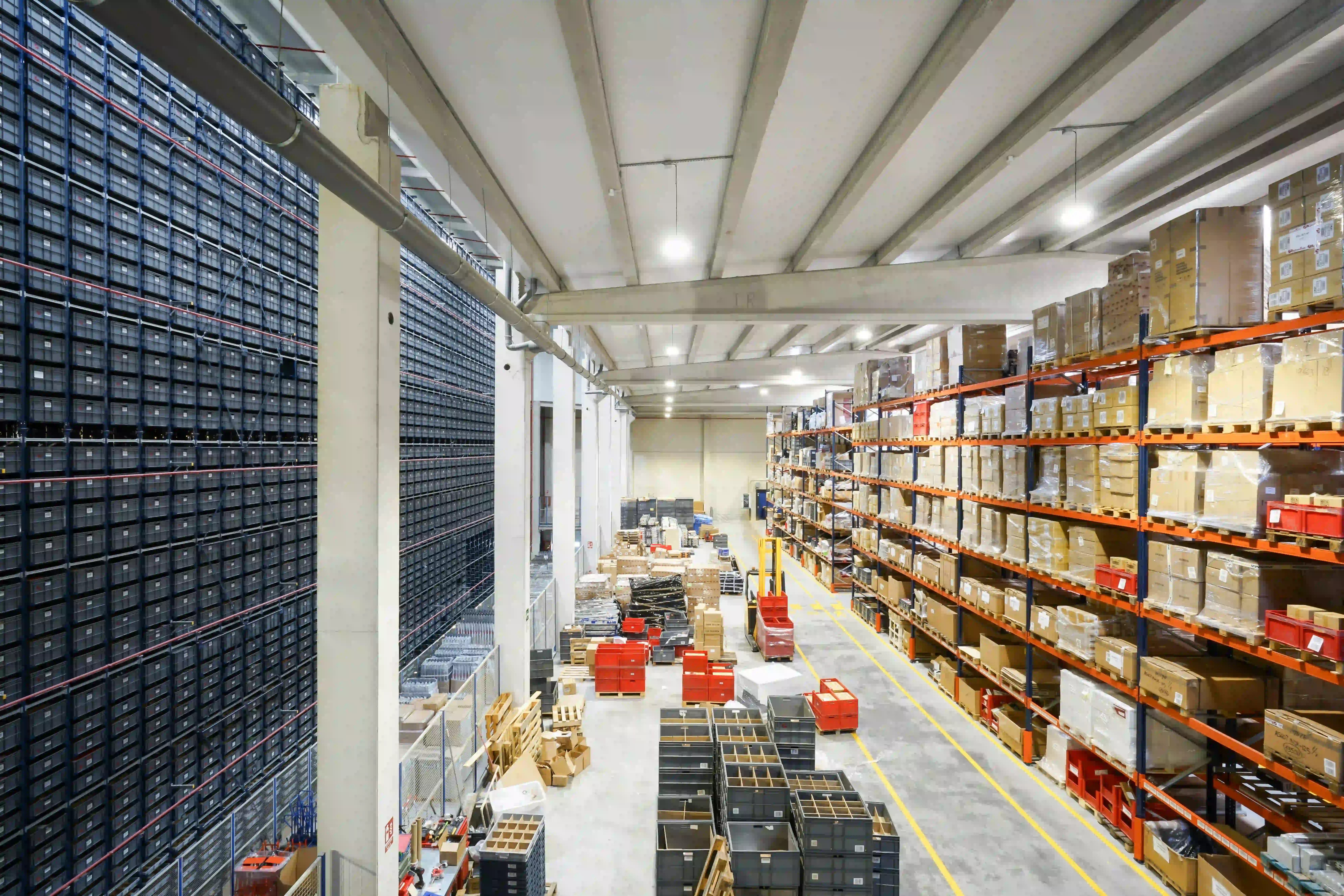
Once received, each item is assigned a specific bin location inside the warehouse. A capable 3PL uses a Warehouse Management System (WMS) to track inventory in real time, giving you visibility into exactly how much stock is on hand, where it’s located, and when you need to reorder. Storage is not a one-size-fits-all thing though.
Some providers specialise in high-density racking for small, lightweight items. Others have the infrastructure for bulky or oversized goods that need pallet storage or floor space. If you sell perishable products, your provider needs batch tracking and expiry date management so that the oldest stock ships first (this is called FEFO: First Expiry, First Out).
What to ask: How does the provider charge for storage? Per pallet, per shelf location, per cubic metre? Storage costs can quietly become your largest fulfilment line item if you hold slow-moving inventory. Get the pricing model in writing before you commit.
3) Order processing and fulfilment management
When a customer completes a purchase on your Shopify store, Amazon listing, WooCommerce site, or other online store for example, that order data is pushed to the 3PL through an API integration. The order appears in their system and joins the queue to be picked.
This stage is governed by the provider’s cut-off time: the latest point in the day at which an incoming order can still be processed for same-day dispatch. Cut-off times vary significantly across providers. Fulfil with Synergy, for example, operates an 11pm cut-off, meaning orders placed in the evening can still ship the same day. Other providers set their cut-off at 2pm or earlier, which limits how many of your daily orders qualify for next-day delivery.
What good looks like: a direct integration with your sales channels that triggers the pick list instantly. If the connection is manual or runs on batch imports, you lose hours of processing time every day. Ask potential providers which platforms they integrate with natively and what the setup timeline looks like.
4) Order picking and item retrieval
Picking is the physical retrieval of items from storage. A warehouse operative follows a generated pick list, navigating the warehouse to locate and collect each product in the order.
This is where human error has the most impact. If a picker grabs the wrong SKU or the wrong quantity, the mistake cascades: the customer receives the wrong item, files a complaint or a return, and your brand takes the reputational hit. High-performing providers treat pick accuracy as a headline metric. Kays Logistics, for example, reports a pick accuracy rate of 99.9%, which at scale means significantly fewer returns and complaints than a provider operating at 98% or 99%.
Why the difference matters: on 10,000 orders per month, the gap between 99% and 99.9% pick accuracy is the difference between 100 errors and 10. Each error costs you in return shipping, replacement stock, customer service time, and lost goodwill. Ask every provider you evaluate for their pick accuracy rate and how they measure it.
5) Packing and parcel preparation
Once picked, items move to a packing station where they are packaged for shipping. The goal is to protect the product during transit while keeping the parcel dimensions as small as possible. Oversized packaging triggers “dimensional weight” surcharges from carriers, where you are charged based on the size of the box rather than its actual weight. This is one of the most common sources of hidden cost in ecommerce fulfilment.
How it varies across providers: if your brand uses custom packaging, branded tissue paper, insert cards, or gift notes, you need a provider whose packing workflow can accommodate these extras without slowing down throughput. Some 3PLs treat branded packing as a standard service. Others charge per insert or require minimum volumes to justify the setup. Get clarity on this before you sign, not after your first invoice.
6) Shipping, carrier handoff, and last-mile delivery
The final stage is handing the packed parcel to a carrier for delivery. A capable 3PL does not rely on a single carrier. Instead, they maintain relationships with multiple shipping services and select the best option for each parcel based on destination, weight, speed, and cost.
What you actually pay: 3PLs negotiate volume-based rates with carriers, which are substantially lower than the retail rates you would pay shipping parcels yourself. You should be benefiting from those rates. If your 3PL’s shipping costs look close to what you’d pay at the post office, something is wrong. Red Stag, as one example, offers a 5pm same-day shipping guarantee, which is only possible because their carrier relationships and internal processes are built around speed.
Tracking integration also matters here. Your customers expect real-time updates from dispatch to delivery. Make sure your provider’s tracking data feeds back into your store so your customer service team is not chasing carrier portals manually.
What is pick and pack?
Pick and pack is the shorthand term for the core warehouse operation: locating an ordered item (picking) and preparing it for shipment (packing). A pick and pack warehouse is not just a storage facility. It functions as an active assembly line, processing orders continuously throughout the day.

The concept is simple, but execution varies enormously depending on the type of product and order profile. A beauty brand shipping thousands of single-item orders per day needs a warehouse optimised for speed and repetition. A homeware brand shipping multi-item orders with fragile components needs a facility built around careful handling and kitting.
When evaluating pick and pack fulfilment services, the key question is whether the provider’s workflow matches your order profile. Does your product require fragile handling? Do orders frequently contain multiple items that need to be assembled or kitted before shipping? Is custom packaging part of your brand experience?
These are not generic questions. The answers determine which providers are a genuine fit and which will create friction from day one. A provider like Red Stag builds its pick and pack process around speed, offering same-day shipping guarantees. Others prioritise flexibility, handling complex kitting requirements that high-speed facilities cannot. The right choice depends on what your orders actually look like, not on which provider has the best website.
Returns and reverse logistics
Returns are part of the ecommerce fulfilment cycle, not an afterthought. When a customer sends an item back, it needs to be received at the warehouse, inspected, graded (sellable, damaged, or defective), and either returned to available stock or written off.
If your 3PL does not have a structured reverse logistics process, returned items sit in limbo: unavailable for sale, taking up space, and invisible in your inventory count. The speed at which a returned item is scanned back into stock and made available for the next customer to purchase is a meaningful operational metric. Ask your provider what their returns processing time looks like, and whether the process is different for high-value or fragile items.
We will be publishing a dedicated guide to ecommerce returns and reverse logistics. For now, treat returns handling as a core part of your provider evaluation, not something to sort out after you have signed.
In-house vs outsourced fulfilment: A founder’s framework
Most ecommerce brands start by fulfilling orders themselves. It makes sense: you control the experience, you know exactly what goes in every box, and you avoid paying a 3PL’s per-order fees.
As James Olsen, founder of fulfilment.com, puts it:
“Every brand starts packing orders from their kitchen table or garage. That’s normal. The question is whether you recognise the point where that stops being resourceful and starts holding you back.”
The tipping point is different for every brand, but the signals are consistent. You are spending more time on logistics than on product development or marketing. Your pick accuracy is slipping because the process depends on one or two people who’re stretched thin. You can’t say yes to a big retail opportunity or a spike in demand because you physically don’t have the warehouse space or the labour to make it happen.

At that point, the question isn’t whether outsourcing costs more than you doing it. It’s whether the time and capacity you get back are worth more than the fee. For most brands beyond a few hundred orders a month, the answer is yes.
This isn’t a simple pros and cons calculation. It’s a question of what stage your business is at and what you need your time to be spent on. If you’re still at the stage where packing orders gives you useful insight into your product and customers, stay in-house. If you’re at the stage where logistics is consuming time that should go toward growth, it’s time to talk to providers.
How to choose the right fulfilment model
Choosing a fulfilment provider isn’t about finding the cheapest warehouse. It’s about matching your operational needs, order profile, and growth trajectory with a provider whose strengths align. Here are the criteria that matter most, based on what we see across thousands of brand-provider matches on the platform.
Transparency: Does the provider give you clear, granular reporting on inventory levels, order status, and shipping costs? If the reporting is a black box, you will always be chasing answers.
Integration: Can they connect with your existing sales channels (Shopify, WooCommerce, Amazon, and others) without requiring a custom developer to build the bridge? Native integrations save weeks during onboarding.
Proven accuracy: Can they share their pick accuracy rate and back it up? Any provider can claim high accuracy. Ask for the data and how they measure it.
Peak capacity: Can they handle your busiest trading periods (Black Friday, product launches, seasonal spikes) without service levels collapsing? Ask what happened during their last peak and how they staffed for it.
Relevance: Have they successfully managed brands with a similar order profile, product type, and volume to yours? A provider that excels at shipping small, lightweight items may not be the right fit for heavy or fragile goods.
For brands that sell to other businesses as well as direct to consumers, the requirements change further. B2B fulfilment involves different packaging standards, compliance labelling, and delivery expectations.