The easy way to onboard with a 3PL
Table of contents
Share
We hear about poor onboarding experiences time and time again: a brand signs with a 3PL, assumes the provider will take it from there, and they find themselves three weeks later dealing with a missed go-live date, unresolved inventory discrepancies, and an account manager who's stopped responding promptly.
This guide walks through every phase of the onboarding process: what to prepare before day one, what each stage involves, what it costs, and which Key Performance Indicators (KPIs) tell you whether the partnership is working at 30, 60, and 90 days post-launch.
TL;DR: The 3PL onboarding process typically spans 5 to 90 days depending on provider type. It covers five phases: pre-onboarding prep, account and systems setup, inventory transfer, test orders and go-live, and the first 30/60/90-day performance review. According to the 29th Annual 3PL Study (NTT DATA/Penske, October 2025), 89% of shippers report successful 3PL relationships, but only when expectations are set before day one.
What is 3PL onboarding?
3PL onboarding is the structured process of migrating your inventory, systems, and workflows to a third-party logistics provider, and 34% of partnerships fail due to poor communication during this phase (Inbound Logistics, 2025). Partnering with a 3PL isn't just a handover. It's a joint project with dependencies on both sides, and the brands that treat it that way tend to go live on time.

The distinction between onboarding and ongoing operations matters. Onboarding ends when your first real customer orders are being picked, packed, and shipped consistently to Service Level Agreements (SLA). Everything before that point, including integration, inventory receipt, test orders, and process sign-off, is onboarding. Once you're live, you move into steady-state operations, where a different set of KPIs applies.
Why does this phase set the tone for the entire relationship? Because the decisions made during onboarding, including how inventory is labelled, how returns are routed, and how exceptions are escalated, become the defaults the warehouse team works to. Changing them later is possible but slow and expensive.
The industry data makes the stakes clear. According to the NTT DATA 28th Annual 3PL Study (2024), 84% of shippers and 97% of 3PLs agree there's a need for more strategic, longer-term agreements, yet most skip the alignment work that makes those agreements function. Onboarding is where that alignment either happens or doesn't.
How long does 3PL onboarding take?
3PL onboarding timelines vary massively depending on individual requirements, but can be as little as 5 days at tech-first providers, to 90+ days at enterprise asset-based 3PLs. The difference comes down to integration complexity, SKU count, and Warehouse Management System (WMS) maturity.
Onboarding timeline by provider type:
Provider Type | Typical Timeline |
Tech-first / modern 3PL | 5–14 days |
Mid-market 3PL | 30–60 days |
Enterprise / asset-based 3PL | 60–90+ days |
The factors that accelerate onboarding are almost always on the brand side: clean SKU data, barcodes that match the catalogue, a clear returns policy, and an internal point of contact with authority to make decisions. The factors that delay it are split more evenly. Integration complexity at mid-market providers accounts for a significant share, but incomplete inbound documentation is the most common avoidable delay.
The upside of getting this right is real. When Radial used Pipe17's integration platform to streamline their onboarding process, they compressed timelines from 18 weeks to one week, unlocking up to £400,000 in additional monthly shipping revenue for the 3PL (Pipe17, 2024/2025). That figure is directional rather than universal, but it illustrates why timeline efficiency matters commercially on both sides of the relationship.
For brands, the practical implication is straightforward: if you have a product launch, a retail partnership start date, or a peak season deadline, work backwards from it and verify your chosen provider's realistic go-live timeline before you sign.
Phase 1: Pre-onboarding preparation
The single biggest cause of onboarding delays is a brand arriving unprepared, specifically missing product dimensions, weight data, or barcode documentation that the 3PL needs to configure their WMS from day one.
This phase happens before you've transferred a single unit. It's the preparation work that determines whether your onboarding runs to schedule or spends its first week waiting for information that should have been ready at the start.
The 3PL industry generated $1.26 trillion in global revenues in 2025 (Capital One Shopping Research, March 2026). That scale doesn't change the fact that a provider's ability to receive your inventory correctly depends almost entirely on the quality of data you give them upfront.
Pre-onboarding checklist: have these ready before day one:
SKU catalogue: every active SKU with product name, variant, and internal reference
Dimensions and weights: length, width, height, and weight for each SKU including packaging
Barcode data: Universal Product Code (UPC), Amazon Fulfilment Network Stock Keeping Unit (FNSKU), or own-label barcode for every SKU
Packaging specifications: carton sizes, units per carton, any fragile or special handling requirements
Carrier account credentials: if you're using your own carrier accounts rather than the 3PL's negotiated rates
Returns policy: what to inspect, what to restock, what to quarantine or dispose of
SLA expectations: same-day cut-off times, dispatch windows, target delivery speeds by region
Inbound shipment schedule: when your first inventory transfer will arrive, from where, and in what format
The items brands most commonly arrive without: accurate weights and dimensions (often because they've been shipping from a fulfilment operation that never needed them formally documented) and a written returns policy (often because returns have been handled ad hoc in-house).
Phase 2: Account setup and systems integration
Systems integration is the most technically complex phase of 3PL onboarding. Connecting your storefront (Shopify, WooCommerce), Enterprise Resource Planning (ERP) system, and the 3PL's WMS typically accounts for 60–70% of total onboarding time at mid-market providers.
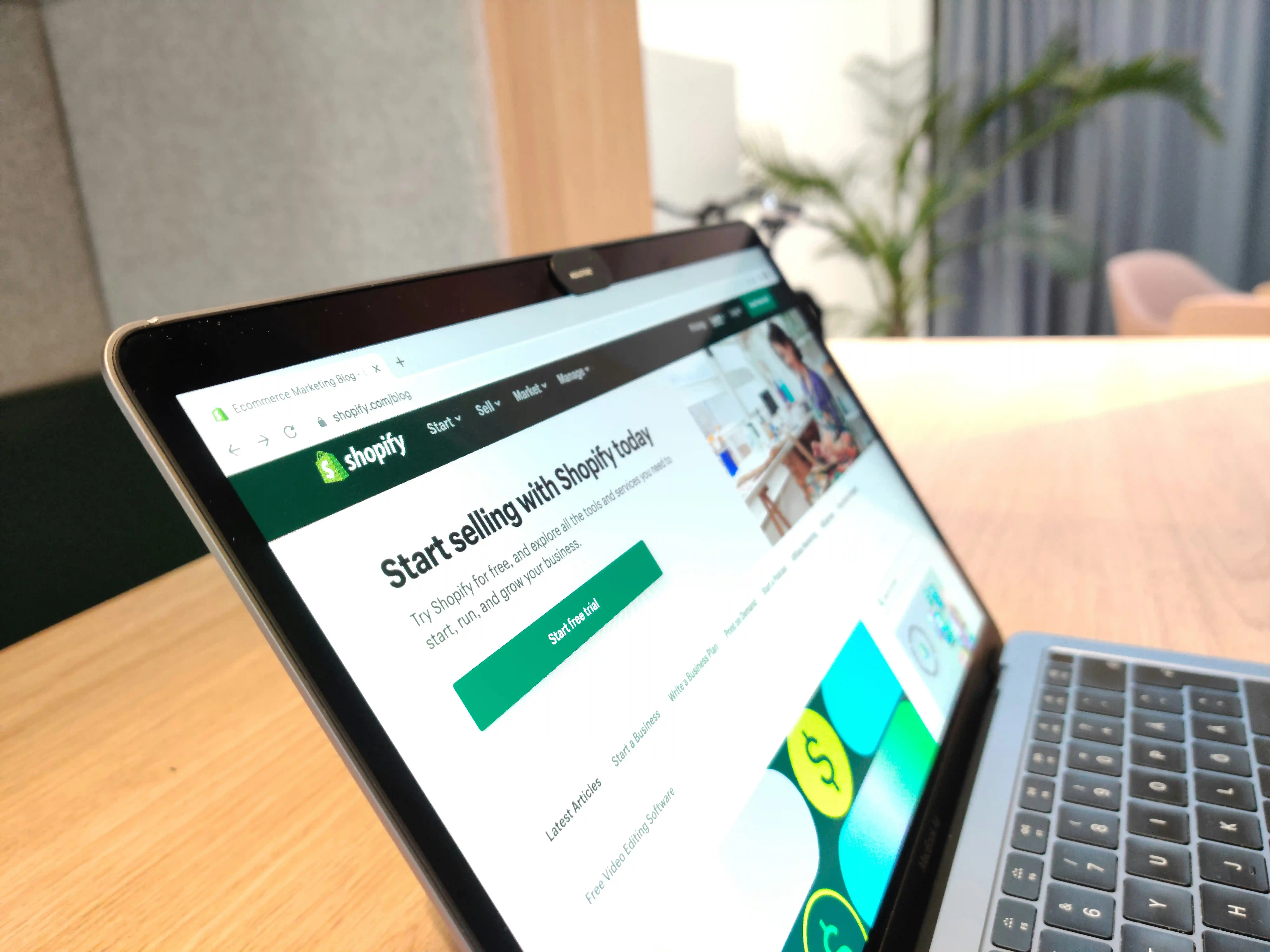
There are two main integration approaches. Application Programming Interface (API) integration is the modern standard: your storefront connects to the 3PL's WMS via API, orders flow through automatically in real time, and tracking numbers push back to the customer without manual intervention. Electronic Data Interchange (EDI) is older and more common at enterprise providers. It works but requires more configuration time and is less flexible when you need to make changes.
For Shopify brands specifically, most modern 3PLs offer a native Shopify app or direct API webhook. Setup typically takes one to three business days once credentials are exchanged. WooCommerce and BigCommerce integrations are similarly straightforward at tech-first providers. Amazon Multi-Channel Fulfilment (MCF) requires additional configuration because Amazon's feed structure is distinct from standard order management flows.
During this phase you'll also configure:
Order routing rules: which orders go where, and under what conditions (geography, SKU, delivery speed)
Return processing workflows: how returned orders are triaged, inspected, and either restocked or flagged
Inventory sync frequency: how often stock levels update between the WMS and your storefront to avoid oversells
The broader industry picture supports investment in this phase. According to the NTT DATA/Penske 29th Annual 3PL Study (October 2025), 82% of shippers report improved customer service after 3PL adoption, 68% report access to innovative logistics solutions, and 66% report reduced overall costs. Those outcomes don't materialise from a poorly integrated system. And 94% of 3PL respondents now rate Artificial Intelligence (AI) adoption as their most impactful operational technology (Inbound Logistics, 2025), meaning modern providers expect API-native integration as the baseline, not a premium.
Phase 3: Inventory transfer and first receipt
The inventory transfer phase covers physically moving stock into the 3PL's facility and verifying every SKU against your product catalogue. It's when the most errors are caught. Discrepancies in labelling, damage in transit, and count variances are normal. How your 3PL handles them is the signal.

Inbound shipment requirements vary by provider but typically include: advance shipment notification (ASN) sent before the goods arrive, cartons labelled with your reference and the 3PL's location code, and a packing list that matches what's actually in each carton. Arriving without an ASN is one of the most common causes of receiving delays. Without one, the warehouse team must manually identify and count everything rather than scanning against an expected list.
Receiving timelines at most mid-market providers run two to five business days from arrival to put-away, assuming your inbound documentation is clean. Enterprise providers with high inbound volumes can take longer. Ask for this figure specifically before signing, as it directly affects when you can start taking orders.
When discrepancies arise (and they will), a competent 3PL will: document the issue with photographs, pause put-away on the affected units until resolved, and issue a formal discrepancy report within 24–48 hours. The resolution process determines who bears the cost, depending on whether the shortfall is attributed to transit loss, origin count error, or receiving error. Get this process documented in your contract before inventory moves.
75% of businesses report decreased total logistics costs after adopting a 3PL, primarily through improved routing, load optimisation, and carrier access (PLS Logistics via ClickPost, 2025). But those savings don't materialise if the inventory foundation is wrong from day one.
Phase 4: Test orders, standard operating procedure sign-off, and go-live
Before your 3PL goes live with real customer orders, you must run test orders: at least 5–10 transactions that simulate your most common order types. This is the final gate before Service Level Agreement (SLA) commitments begin.
Run test orders across at least four scenarios:
Standard single-item order: your most common order type
Multi-item order: tests pick accuracy across SKUs
Expedited order: tests priority routing and cut-off compliance
Return: tests the reverse logistics workflow end to end
For each test order, verify: pick accuracy (was the right item picked in the right quantity), pack quality (is the packaging consistent with your spec), label compliance (does the carrier label include all required fields and scan correctly), and tracking integration (does the tracking number push back to your storefront and trigger the customer notification).

Standard Operating Procedure (SOP) sign-off happens in parallel. This is the formal documentation of how your account runs, covering everything from special handling instructions to escalation contacts to returns triage criteria. Don't skip it. The SOP becomes the reference document when something goes wrong at 2am on a Saturday and the account manager isn't available.
Go-live criteria should be agreed before test orders begin. Typically: zero pick errors on test orders, tracking integration confirmed, SOP signed by both parties, and inbound inventory fully received and location-assigned. If any of those aren't met, go-live moves. That's not a failure. It's the process working correctly.
The stakes are real. 48% of shippers say their customers now expect sub-two-day delivery (NTT DATA/Penske, October 2025). Go-live errors aren't internal: they're visible to end customers immediately.
FAQs
How long does 3PL onboarding typically take?
5–90 days depending on provider type. Tech-first 3PLs can onboard in under two weeks; traditional mid-market providers average 30–60 days; enterprise asset-based 3PLs typically run 60–90+ days (Simpl Fulfillment, 2025; Racklify, 2026). The main variables are integration complexity, SKU count, and how prepared the brand is on day one.
What information do I need to provide to a 3PL at onboarding?
Your SKU catalogue with dimensions and weights, barcode data (UPC/FNSKU), packaging specifications, carrier account credentials if applicable, your returns policy, SLA expectations, and your inbound shipment schedule. Missing any of these delays the WMS configuration and pushes your go-live date.
What happens if my inventory count is wrong during receiving?
The 3PL should document discrepancies with photographs, pause put-away on the affected units until the issue is resolved, and issue a formal discrepancy report within 24–48 hours. Resolution responsibility depends on whether the error occurred in transit or at origin, which is why inbound shipment documentation matters.
How do I integrate my Shopify store with a 3PL?
Most modern 3PLs offer a native Shopify app or direct API webhook. The integration syncs orders in real time and pushes tracking numbers back automatically. Setup typically takes one to three business days once credentials are exchanged. If your 3PL doesn't have a native Shopify integration, ask specifically what the alternative process involves and how long it takes.
What KPIs should I track in the first 90 days with a new 3PL?
Order accuracy rate (target above 99.5%), on-time ship rate (target above 98%), inventory discrepancy rate (target below 0.5%), and support response time (target under four hours). Track these at 30, 60, and 90 days, not just at go-live. The 60-day check in particular catches systemic issues before they become entrenched.
How we can help
Having matched hundreds of brands with their ideal 3PL partner, we've seen first-hand how a smooth onboarding process can set the foundations for a long and fruitful fulfilment partnership. If you're still unsure of what to expect, reach out to us via our 'Book a Call' function, and one of the team will be more than happy to help.